
UK jobs data released this week highlights a deepening slowdown in the labour market. This adds to concerns that economic momentum is weakening. Unemployment edged higher to 4.7% in the three months leading to May. That’s the highest reading since mid-2021. The figure not only surpasses market expectations, but also signals an increasingly fragile employment environment.
UK Jobs Data Shows Wage Growth Is Cooling
While unemployment rose, wage growth eased. Regular pay increased by 5.0% year-over-year—its softest pace in nearly two years. Total earnings rose at the same 5.0% annual pace. Both measures slowed compared to April. This points to cooling employer pay pressures and a broader softening in earnings momentum.
Payroll Data Reflects Sustained Job Losses
HMRC’s PAYE payroll data for June showed a net loss of 41,000 payrolled jobs. That makes it eight consecutive months of employment declines. Since last October, the UK has lost jobs each month. This trend suggests the deterioration in hiring is becoming more entrenched than previously assumed.
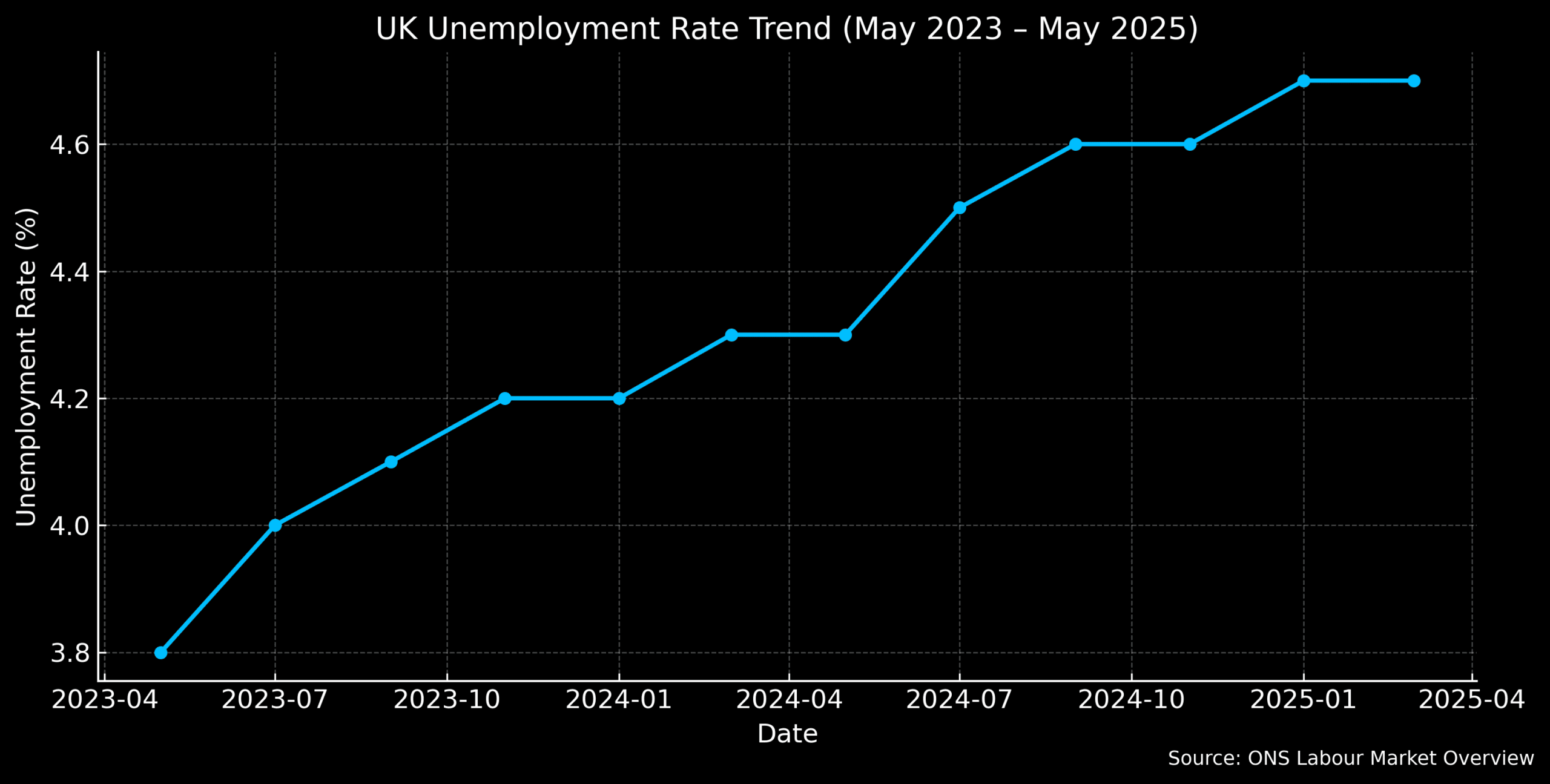
What’s Driving UK Labour Market Weakness?
Several factors appear to be contributing to the labour market slack. The impact of recent tax increases, such as the National Insurance hike, is still working through household and corporate budgets. The recent rise in the minimum wage may also be a factor. It could be prompting some employers to cut headcount or delay hiring, especially in low-margin industries.
BoE Outlook: Policy Caution Despite Weak UK Jobs Data
Despite the softening labour data, the Bank of England is unlikely to act aggressively. Inflation remains sticky, especially after the surprise jump in June’s CPI figures. As a result, the BoE will likely keep its ‘gradual and careful’ stance. Markets currently expect no more than two 25bp rate cuts this year.
The combination of tight monetary policy and expected fiscal tightening this autumn could further suppress job creation. With employers squeezed by rising costs and weakening demand, further labour market deterioration seems likely. The data points to a job market under increasing pressure, with downside risks building.
For a broader understanding of how employment data affects markets, see how the unemployment rate influences economic policy.
While headline unemployment remains historically low, the steady loss of jobs and falling wage growth are warning signs. For policymakers and traders alike, UK jobs data will remain a crucial gauge of economic health in the months ahead.