
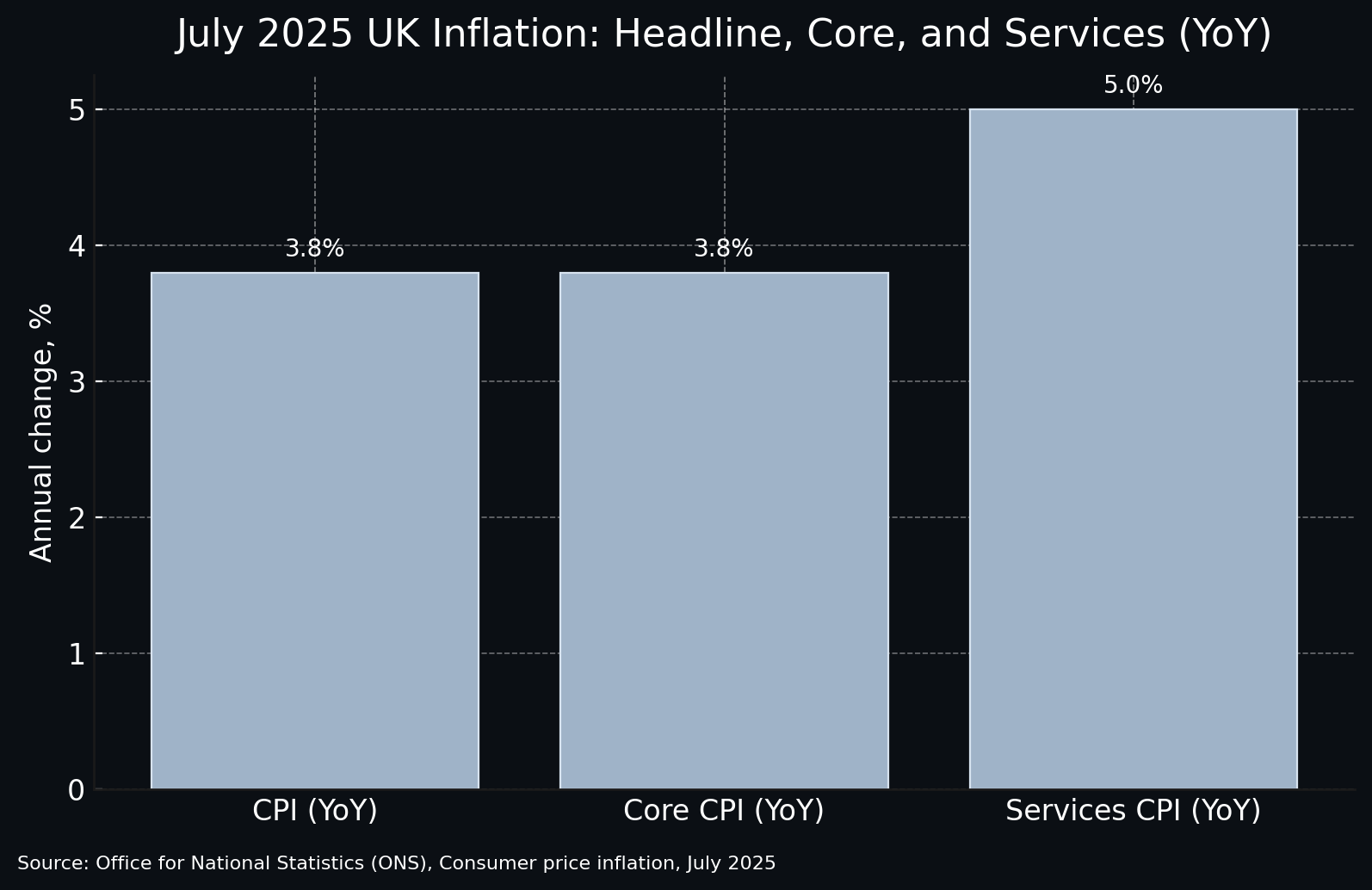
July UK inflation accelerated to 3.8% year-on-year, the fastest pace since early last year and broadly consistent with Bank of England projections (Bank of England). While that print remains below the highs seen in previous cycles, the near-term path looks uneven, with forecasts pointing to a possible 4.0% YoY peak around autumn before easing resumes.
July UK inflation: underlying pressures remain sticky
Beneath the headline, measures that the central bank watches most closely point to persistent pressure. Core CPI—which strips out food and energy—also rose 3.8% YoY, and the services CPI gauge advanced 5.0% YoY. Services inflation is often a window into domestic cost dynamics, including wages, rents, hospitality, travel, and recreation. The latest readings suggest that price-setting in these areas has not cooled sufficiently to be consistent with a durable return to the 2% target (ONS data).
What pushed prices higher in July?
- Food: Another sizeable increase kept grocery inflation elevated, even as some wholesale inputs have steadied.
- Energy: Consumer bills received an upward nudge as the price cap adjustment this year was less generous than last July’s decline.
- Airfares and leisure: A sharp seasonal rise in air travel costs—one of the largest July jumps in decades—added to the monthly impulse. Sampling also coincided with a busy events calendar, which may have temporarily skewed some components within services.
None of these categories alone explain the whole story. Rather, they illustrate how a cluster of seasonal and regulatory factors can amplify underlying cost pressures, keeping the overall basket from cooling as quickly as hoped.
Bank of England policy outlook amid July UK inflation
Monetary policy makers recently delivered a 25bp reduction in Bank Rate by a razor-thin margin, signalling a willingness to begin normalisation while emphasising a gradual and careful approach. July’s data are unlikely to shift the balance toward faster easing. The next meeting is expected to be a placeholder, with the committee preferring to assess a fuller run of data before any further moves. If inflation peaks near 4% in the autumn and then trends lower into year-end, a follow-up cut remains plausible, but the bar has risen.
What to watch next
- Services CPI and wage growth: A sustained downtrend here would build confidence that inflation is heading back to target.
- Energy and administered prices: Future cap resets will shape the near-term inflation path, even as wholesale markets stabilize.
- Demand indicators: Retail volumes, travel demand, and hospitality pricing will show whether seasonal strength fades.
- Fiscal signals: The autumn Budget and any consolidation measures could influence both demand and the policy reaction function.
Bottom line
July UK inflation highlights the challenges of steering the economy back to 2%. With headline and core both at 3.8% YoY and services at 5.0% YoY, the inflation mix remains inconsistent with a swift return to target. Policy is likely to stay data-dependent and measured, with scope for additional cuts only if underlying pressures convincingly soften in the months ahead.