
The FTSE 100 sets a new record close even as UK inflation rose more than expected, highlighting the benchmark’s resilience compared with global peers. While higher consumer price data usually pressures equities, the London index outperformed, supported by defensive sectors and its international earnings exposure. Bank of England policy remains a key driver for market sentiment.
Why the FTSE 100 sets gains in motion
Consumer staples and healthcare stocks provided strong support as investors rotated toward defensives. Domestic sectors tied to interest rates, including homebuilders, faced selling pressure amid concerns that borrowing costs will stay elevated. Energy and miners delivered a mixed performance as company-specific developments intersected with commodity price swings.
Relative performance and positioning
Compared with global markets, the FTSE 100’s rally stood out. Wall Street indices eased ahead of central bank speeches, while European peers traded cautiously. The UK index’s heavyweights in healthcare, energy, and consumer goods make it attractive during periods of inflation uncertainty. For broader global market context, see Reuters Markets coverage.
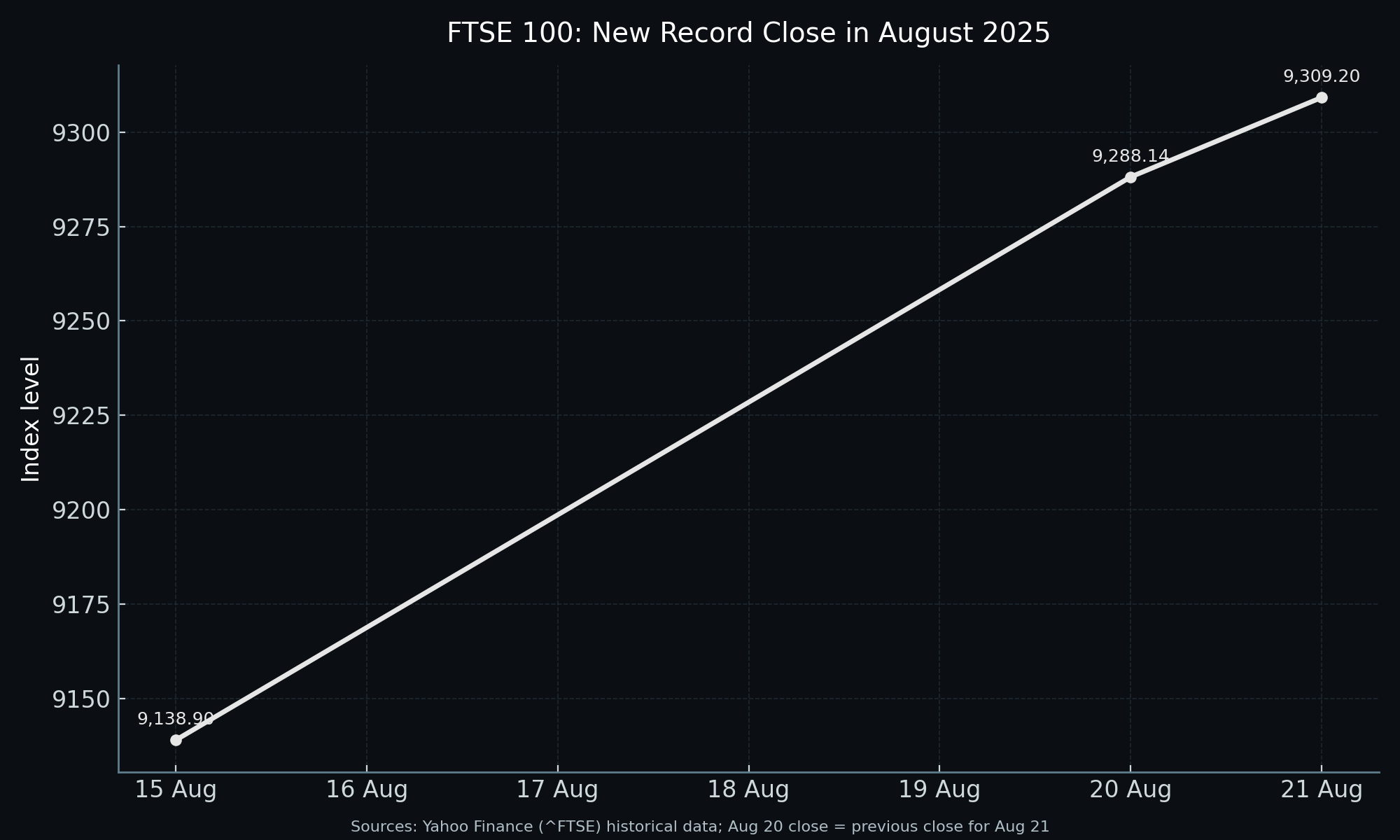
Source: Yahoo Finance (^FTSE) historical data (15 Aug, 20 Aug, 21 Aug 2025).
(Past performance is not a reliable indicator of future results.)
FTSE 100 sets technical signals near overbought
The daily chart shows the 20-day simple moving average acting as a dynamic support, reinforcing the broader uptrend. Momentum indicators are edging toward overbought territory, suggesting potential consolidation but not yet signaling exhaustion. Traders will be watching whether follow-through buying can confirm the breakout.
Levels to watch
- Resistance: The recent record close is the immediate hurdle. Sustained strength above this level would attract further momentum buying.
- Support: Initial support sits at the prior breakout zone and near the 20-day moving average. A move below this area could trigger profit-taking.
FTSE 100 sets sector winners and laggards
Defensive sectors led gains, reinforcing the FTSE 100’s resilience in a high-inflation backdrop. Banks reacted to shifts in rate expectations, though the yield curve limited upside. Domestic cyclicals, particularly in housing, lagged. Industrials traded mixed, while defense stocks saw pressure following signs of progress in geopolitical negotiations.
What could shift the narrative
Upcoming inflation releases, wage growth data, and policy direction from the Bank of England will be pivotal. A faster fall in inflation could revive hopes of rate cuts and broaden the rally into interest rate-sensitive sectors. Conversely, persistent inflation would reinforce the higher-for-longer stance, weighing on domestically focused equities. See more on inflation outlook from Capital.com’s inflation updates.
Bottom line
The FTSE 100 sets a new record close despite inflation running hotter than expected, underscoring the defensive strength and international exposure of the index. Momentum remains constructive, though stretched indicators suggest caution. Traders should monitor support and resistance levels closely while managing risk around macro catalysts.