
The recent Bitcoin Dip has highlighted how quickly sentiment can shift when liquidity dries up and leveraged positions unwind. This move was less about a change in fundamentals and more about flow dynamics, with market depth temporarily too shallow to absorb large sell orders. Understanding why this happens is crucial for traders looking to manage risk in fast-moving crypto markets.
Demand-side: a buyer’s strike
One of the clearest themes is an absence of committed bid-side demand. In tightly wound markets, a small imbalance between buy and sell interest is amplified by leverage and short-term momentum trading. If headline events or nearby macro risks discourage fresh entries, the market can briefly lack the depth needed to absorb larger sell orders. The practical result: prices fall faster than they recover until buyers reappear with conviction.
Supply-side: liquidation and large sellers
On the supply side, extended long positions and concentrated exposures can create cascades. Large sell orders from substantial holders — whether strategic rebalances, treasury sales, or risk reductions — can trigger stop-losses and force liquidations across derivatives venues. That mechanical selling feeds on itself until liquidity providers, arbitrage desks and longer-term buyers step in. Recent data from Coinglass shows how liquidations have accelerated during periods of thin liquidity.
Why liquidity matters
Liquidity functions like oxygen for price discovery. When it thins, even modest flows can move prices materially. Temporary reductions in market liquidity — whether from funding strains in related markets, month-end balance-sheet adjustments, or risk-off positioning in broader asset classes — make it harder for markets to absorb order flow without outsized price moves. For those tracking technicals, TradingView charts provide a useful visual of these shifts in real time.
Bitcoin Dip Technical Levels and Momentum Checkpoints
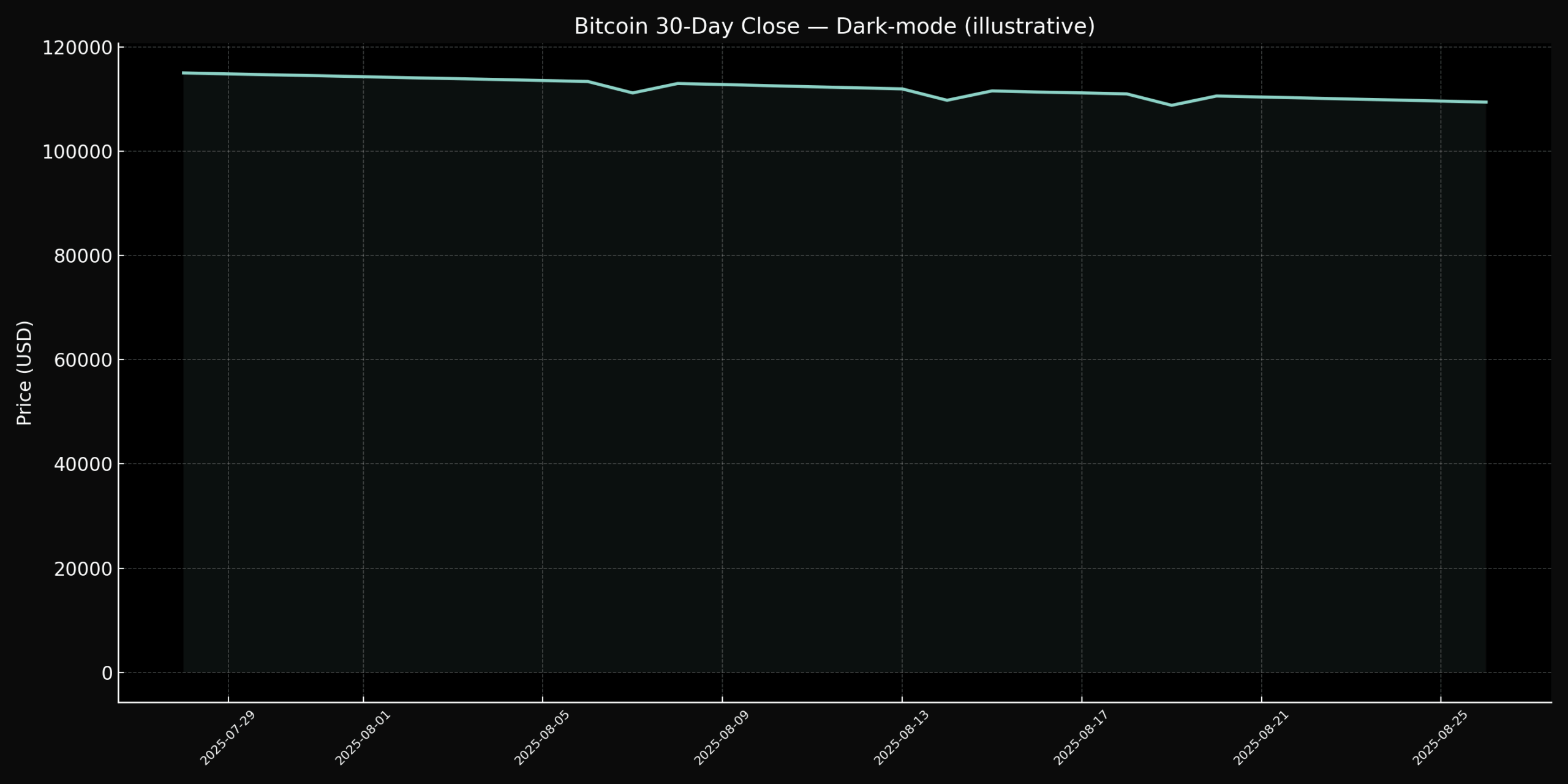
From a technical perspective, traders will watch how price behaves around recent support and short-term moving averages. A failure to stabilize below a key support area suggests further near-term downside risk, while a clear reclaim and close back above that zone — together with improving momentum — would increase the probability of a resumed uptrend. For short-term traders, using a combination of daily closes and a fast EMA to confirm momentum can reduce false re-entries.
Practical guidance for traders (impartial)
- Respect liquidity: widen stops and reduce size when market depth is poor.
- Manage leverage: forced liquidations amplify moves; avoid structural exposures you can’t hold through volatility.
- Watch flow signals: large exchange prints, sudden shifts in order-book skew and aggregated liquidation reports often precede sharp moves.
- Wait for confirmation: prefer entries after momentum shows a reliable shift rather than attempting to catch every dip.
Looking for a trusted broker with multiple platform options? Start trading with FxPro today and take advantage of competitive spreads and top-tier regulation.
👉 Open an account with FxPro Now
Final Thoughts on the Bitcoin Dip
A flush-out of stretched longs and leveraged positions can be uncomfortable but also healthy for longer-term price discovery. The immediate path depends on whether buyers return with conviction and whether liquidity conditions normalize. For now, an evidence-based approach — watching order flow, liquidity metrics and clean technical confirmations — provides an impartial framework for decision-making in an environment where flow, not fresh fundamentals, is driving price action.