
The latest UK labour market data points to a stabilising trend. Unemployment stayed at 4.7% for the three months to July, holding steady for a third consecutive month. ONS labour market estimates note that data quality issues remain, so caution is still required when interpreting the numbers.
Wage growth is cooling but remains high compared with the inflation target. Regular earnings, excluding bonuses, rose 4.8% year-on-year. Total pay grew 4.7%. Both figures stay above levels consistent with the Bank of England’s 2% inflation target. Elevated pay growth risks keeping services inflation sticky, which policymakers will monitor closely. ONS data
Payrolled employment slipped again in August, marking another monthly decline, though the drop was modest. This marks the seventh straight fall in payrolls, showing that hiring momentum remains soft. Redundancies remain elevated but are not accelerating, and a small fall in economic inactivity suggests more people are looking for work, which could ease labour shortages over time. ONS data
Vacancies fell by around 10,000 in the latest quarter, signalling weak demand for labour in some sectors. Employers remain cautious about hiring as business confidence stays muted. This cautiousness may persist until there is more clarity around the government’s upcoming Budget, which could influence hiring decisions and wage negotiations. Reuters report
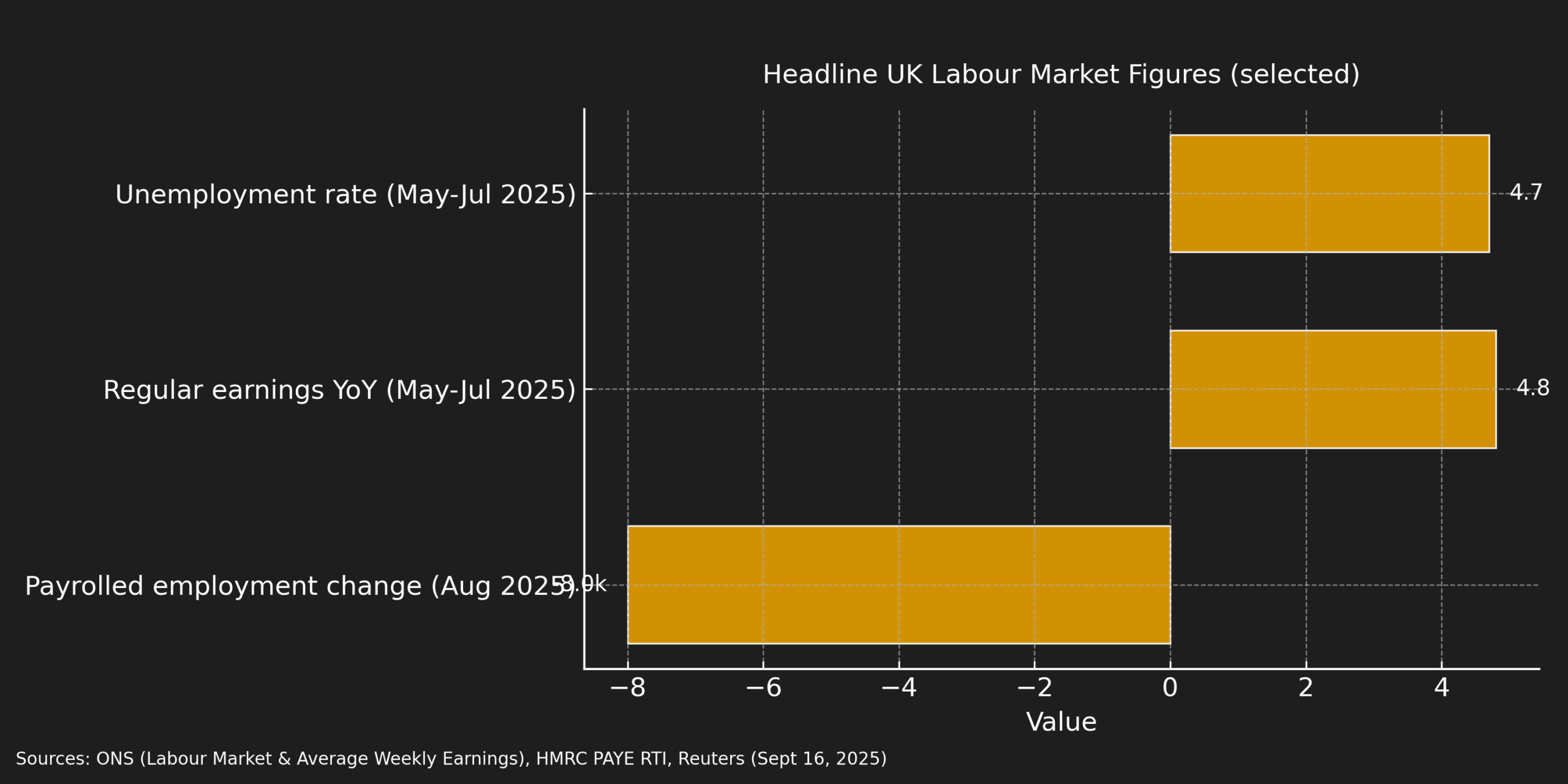
payrolled employment change -8k (Aug 2025). Sources:
ONS,
HMRC PAYE RTI,
and Reuters (Sept 16, 2025).
The Bank of England cut Bank Rate to 4.00% in August and looks set to hold rates at this level in the short term. Financial markets are pricing in a possible 25-basis-point cut in November, depending on inflation trends. September and October CPI releases will be crucial, as a softer print could strengthen the case for further easing. Conversely, a surprise rebound in inflation could delay rate cuts. Bank of England summary
Overall, the UK labour market may have passed its weakest phase, but the recovery remains fragile. Unemployment is steady, wage pressures are easing, and participation is improving. At the same time, slower hiring, falling vacancies, and subdued economic growth show that conditions are not yet strong. The next few months will reveal whether this stabilisation becomes a genuine turning point or if further weakness emerges heading into year-end.