
Why gold is back at the centre of market debate
Gold has resumed its role as both a hedge and a momentum trade. Prices have been pushed higher by a mix of central bank buying, softer dollar dynamics and large-scale investor flows. That combination has lifted bullion into territory where long-term demand arguments clash with short-term speculative behaviour.
What’s driving gold prices higher
Several clear forces are supporting bullion. Public-sector reserve managers continue to add to holdings as part of longer-term diversification strategies. At the same time, expectations for easier monetary policy in major economies have weakened the dollar, making dollar-priced gold more attractive. Large passive and active investment vehicles have also drawn money into the metal, amplifying moves when sentiment turns positive.
Key drivers include monetary policy expectations, reserve diversification by official institutions and renewed investor appetite through ETFs and futures markets.
The speculative side — why this matters
Open interest and futures positioning show a larger-than-normal share of speculative longs. When momentum becomes driven by short-duration capital rather than fundamentals, price moves can accelerate — both up and down. That increases the likelihood of sharp intraday swings and brief but meaningful corrections.
Gold Price Trend (Sep 1–11, 2025)
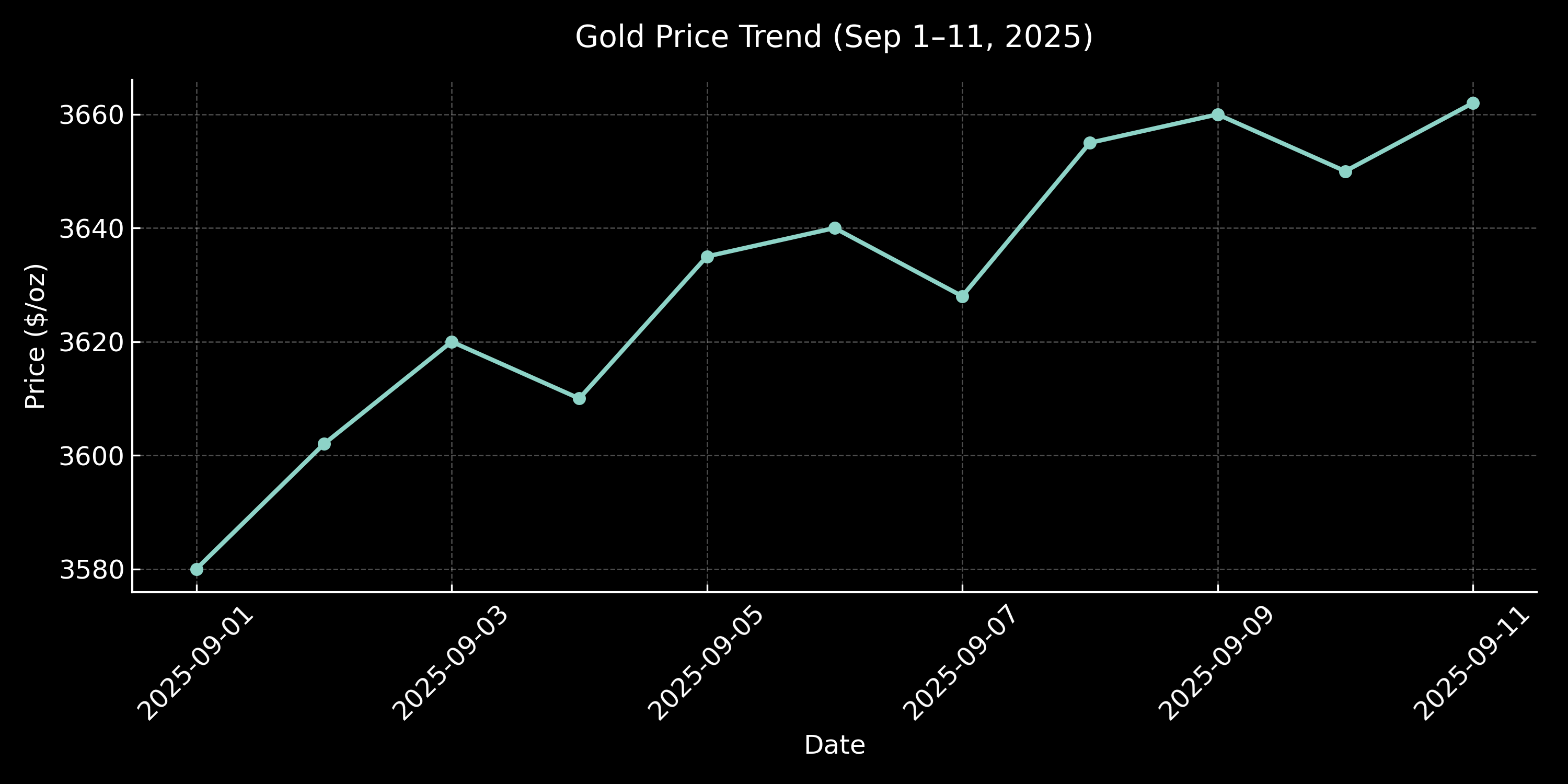
Source: Refinitiv, Filled at Market
Technical levels and what to watch
- Immediate support: the recent consolidation zone — a failure there would invite profit-taking.
- Near-term resistance: the market’s most recent highs — a clean breakout would signal further tests of higher targets.
- Volatility indicators remain elevated, so traders should size positions with the possibility of sudden reversals in mind.
Balancing the narrative: safe haven or froth?
The long-term case for gold rests on reserve diversification, currency concerns and a desire for non-correlated assets. The short-term case is more mixed: rapid flows into ETFs and rising hedge fund longs add speed but also fragility. An impartial stance recognises both realities — structural demand can coexist with episodes of speculative excess.
Practical takeaways for traders and investors
- Define your time horizon: allocate differently for tactical trades versus strategic reserve-like exposure.
- Use clear risk management rules: volatility can spike quickly during speculative episodes.
- Watch positioning and liquidity: large inflows into ETFs or sudden changes in futures positioning often precede rapid repricing.
If you want to dig deeper, the official gold demand reports and futures positioning releases are useful starting points for anyone building a measured view of the market.
Further reading: Gold Demand and Central Bank trends, CFTC Commitments of Traders, market commentary and forecasts.