
Natural gas continues to hover around the psychologically significant $3.00 per MMBtu mark, keeping market participants on edge. While recent sessions have seen multiple intraday dips below this threshold, sellers have so far failed to establish a strong close beneath it. The result: a tense standoff between bearish momentum and persistent buying interest.
Natural Gas Support Holds, But For How Long?
Since mid-June, natural gas has been under renewed pressure, slipping through minor support zones amid weakening seasonal demand. Yet the $3.00 level continues to act as a technical pivot—neither convincingly broken nor decisively defended. Past price action suggests this level attracts significant volume, often leading to temporary reversals or sharp consolidations.
Technically, this area has historically served as a battleground. Failed breakouts or breakdowns around $3.00 have led to short-term trend reversals in the past. The longer this tug-of-war persists, the greater the likelihood of an explosive move once conviction returns to the market.
Looking to trade natural gas with tight spreads and fast execution?
Affiliate disclosure: We may earn a commission if you sign up via this link, at no extra cost to you.
Past performance is not indicative of future results. Always conduct your own analysis before trading.
Fundamentals Keep Pressure on Prices
On the fundamental side, mild weather forecasts and subdued summer demand for cooling have contributed to recent softness. Natural gas demand remains highly seasonal, with usage surging during extreme temperature periods. So far, weather conditions have failed to provide the bullish lift that might push prices decisively higher.
Meanwhile, U.S. production remains steady, and storage levels are well within seasonal norms, reducing the risk of a sudden supply-driven price spike. According to the latest EIA natural gas storage report, inventories remain in line with historical averages.
However, geopolitical factors, export flows via LNG terminals, and any unexpected shifts in supply could rapidly change the picture. For more insights into global LNG trends, the IEA Global Gas Security Review offers valuable forecasts and analysis.
Volatility Set to Persist Around $3.00
Until a clear narrative emerges, the $3.00 level remains the technical fulcrum. A sustained close below this zone may reinforce a bearish trend into the autumn, especially if storage builds outpace expectations or demand projections remain tepid. Conversely, resilience above this level could open the door for short-covering rallies or speculative buying on a perceived base formation.
In the near term, traders should remain focused on price reactions at this threshold. Short-term volatility, driven by updated weather models and inventory data, is likely to remain elevated. For now, natural gas remains locked in a consolidation range—with $3.00 acting as the primary reference point for directional conviction.
Past performance is not indicative of future results. Always conduct your own analysis before trading.
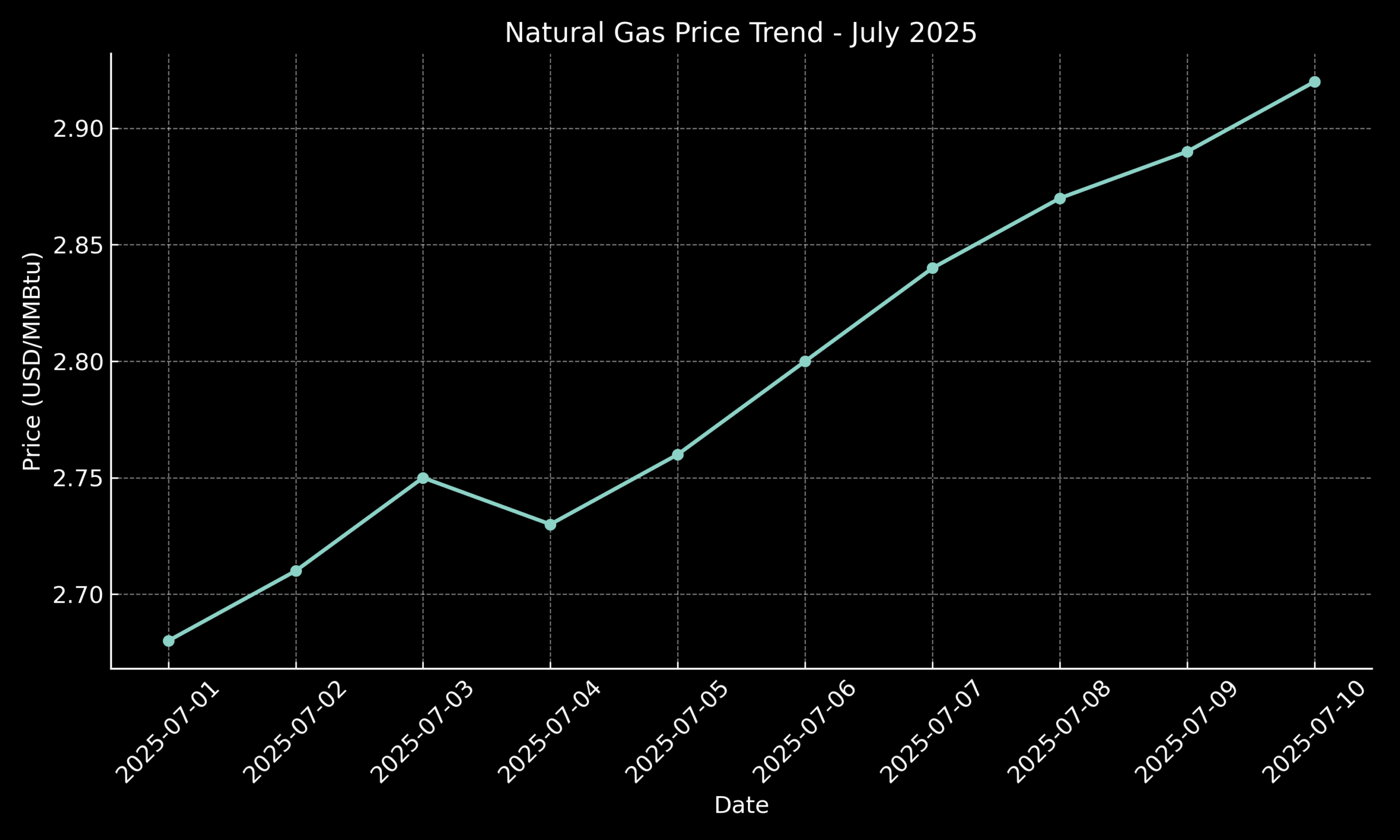
Source: TradingEconomics, EIA · Chart by FilledAtMarket