
Nvidia Q2 earnings are due after the U.S. close on 27 August, with investors focused on guidance, margins, and supply visibility. For context on company updates, see Nvidia Investor Relations. Broader stock performance can also be tracked through Nasdaq NVDA and market coverage on Reuters.
Why this print matters
Expectations are high, and price reaction often hinges more on forward-looking commentary than headline numbers. With training clusters scaling and inference use cases broadening, management’s language around deployment cadence, supply visibility, and the pace of platform transitions could reset sentiment—positively or negatively.
Headline expectations vs. what will actually move the stock
Street models anticipate strong year-on-year gains, supported by robust data center demand. However, forward guidance typically drives market moves. Investors will focus on rollout dynamics for the Blackwell family (GB200/GB300), availability, and adoption patterns. Gross margin durability is a key focal point: commentary on yields, input costs, and product mix will help refine outlooks on profitability.
Nvidia Q2 guidance watchlist: key factors to monitor
- Q3 outlook: Whether management signals continued acceleration or some normalization after exceptional growth.
- Customer mix: Hyperscalers versus sovereign AI projects, second-tier clouds, and enterprise uptake.
- Networking & software: Updates on interconnects and platform software expanding spend beyond accelerators.
- Capacity & lead times: Whether supply constraints persist and how quickly new capacity converts to shipments.
- Capex signals: Customer investment plans and Nvidia’s ecosystem commitments for multi-year AI build-outs.
Geopolitics and regional risk
Export rules and compliance measures remain a key factor. Any clarity on China-qualified offerings, shipment timing, and associated costs will inform how sustainable regional demand looks. Investors will also listen for commentary on competitive alternatives, including in-house silicon at hyperscalers, and whether these trends influence Nvidia’s pricing power or share.
Valuation, positioning, and potential volatility
After a strong rally, valuations leave the stock sensitive to even modest shifts in growth or margin commentary. A confident guide, backed by supply improvements and smooth product transitions, would likely support further upside. On the other hand, a cautious tone on ramps or export constraints could spark volatility as investors reassess positioning.
Nvidia Q2 technical context (non-predictive)
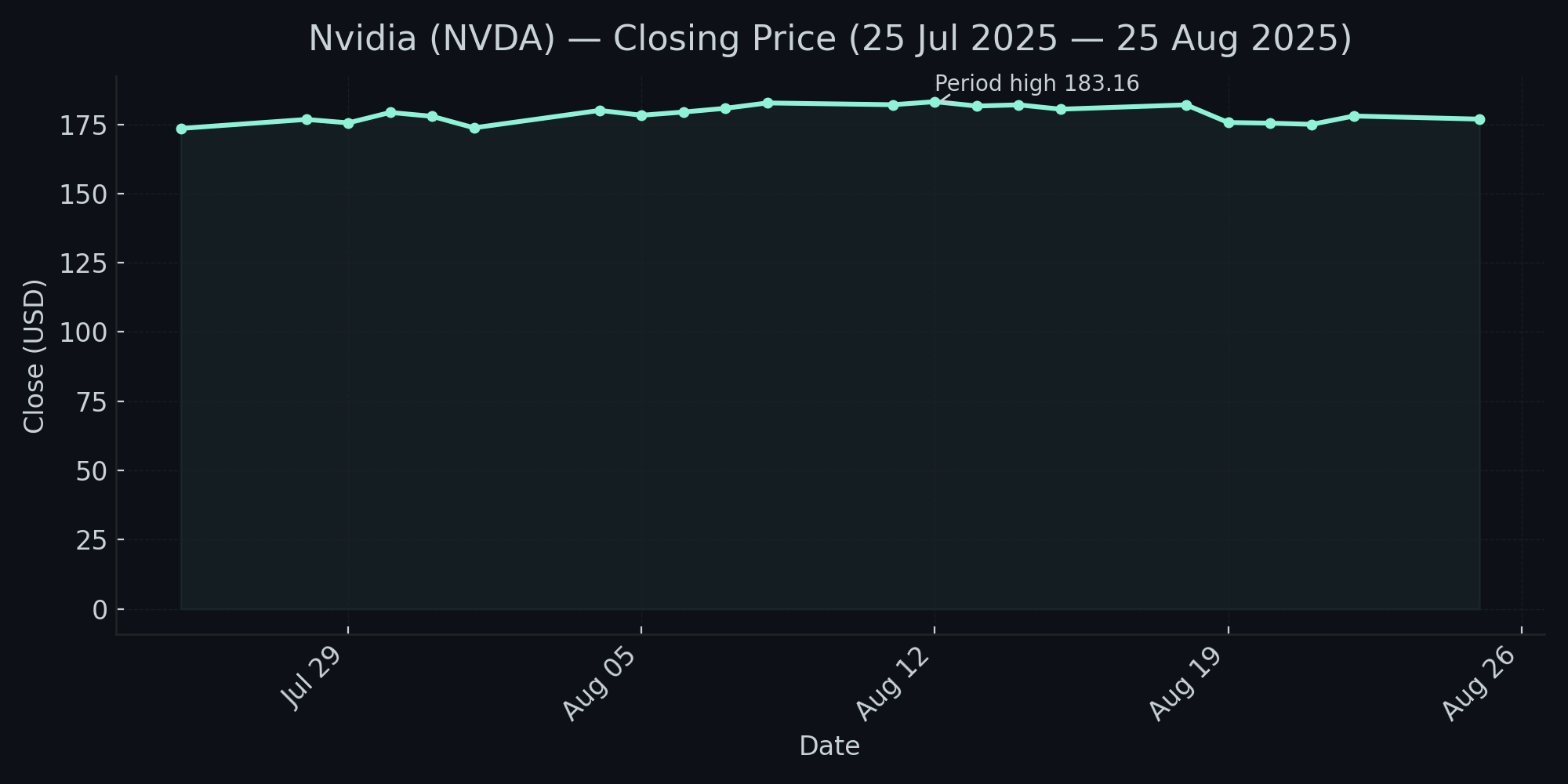
Long-term trend structure remains positive, but momentum has eased from prior peaks. Traders are monitoring former breakout levels and rising trend support as reference points for pullbacks, while new highs would reaffirm the prevailing uptrend. Fundamentals around earnings, however, are expected to dominate direction.
Key questions from Nvidia Q2 earnings call
- How quickly will Blackwell scale across customers, and what mix effects are expected?
- Can gross margins remain elevated as supply improves and product transitions mature?
- What demand trends are emerging in inference, and how do they affect Q3–Q4 guidance?
- How are regional policies and compliance costs shaping pricing and shipments?
- What capacity or ecosystem investments are needed to sustain AI growth momentum?
Past performance is not a reliable indicator of future results.
Disclosure: This is an impartial preview for information only and is not investment advice.