
Overview
The latest UK inflation report for August showed headline CPI holding steady at 3.8% year-on-year, the same pace as July. This result suggests that overall price growth is stabilizing after higher readings earlier in the summer. Consumers and policymakers alike are paying close attention to these trends as they assess the economic outlook.
Core Inflation Moderates
Core CPI, which excludes volatile items like food and energy, eased slightly to 3.6% year-on-year, its first decline since May. Services inflation, a key measure of domestic price pressure, slowed to 4.7%, just below expectations. This moderation indicates that wage pressures and tight labor market effects may be starting to soften.
Key Drivers Behind the Data
Several sectors contributed to the cooling. Airfares, which rose sharply in July, decreased in August. However, food inflation remained high at 5.1% year-on-year, marking the fifth consecutive monthly increase. Persistent food price growth could influence broader consumer expectations and keep overall inflation elevated if it continues. Energy prices, by contrast, remained stable and contributed less to headline inflation.
UK Inflation vs. Core Inflation – Last 12 Months
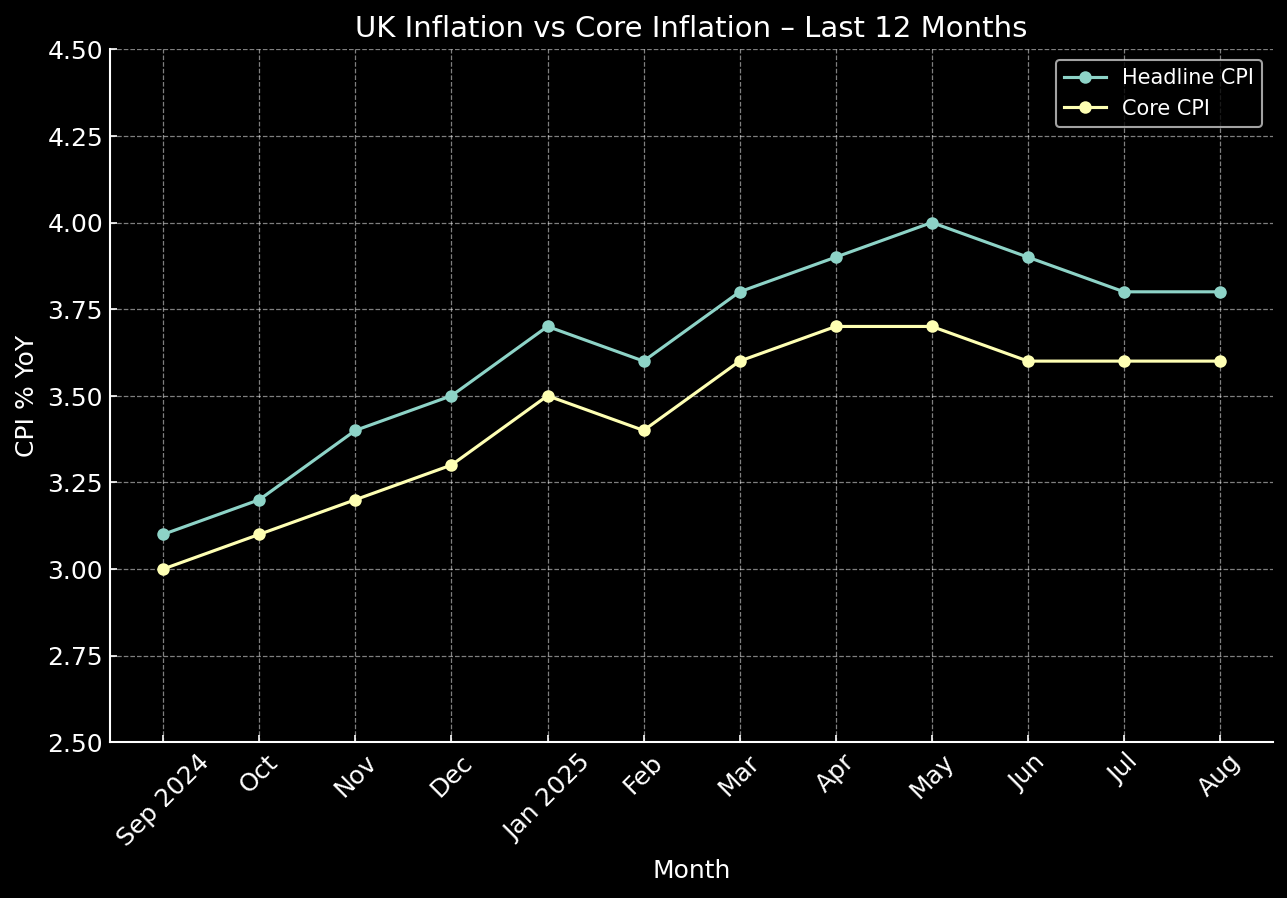
Source: Office for National Statistics (ONS)
Implications for Monetary Policy
Given that the data met expectations, the Monetary Policy Committee (MPC) is likely to keep the Bank Rate unchanged at 4.00% in its next meeting. Analysts expect that a 25 basis point cut may still be possible later this year if inflation shows sustained moderation. The MPC will also consider recent economic indicators and labor market trends before making decisions.
Looking Ahead
Market participants now focus on the next key inflation release from the Office for National Statistics on 22 October. A rise above the projected peak could delay rate cuts, while continued moderation may encourage a more accommodative approach. Investors and households should monitor price trends closely, particularly in food and services, to understand potential impacts on household budgets.
For further updates on UK monetary policy and the MPC, visit the Bank of England Monetary Policy page.