
UK GDP growth has slowed in recent months, showing a clear easing of economic momentum. In the second quarter, the economy expanded by just 0.3% compared with the previous quarter, continuing the trend of modest growth observed earlier this year. For official data, see the ONS GDP statistics.
Part of the UK GDP growth slowdown stems from temporary factors that boosted activity earlier in the year. Export volumes surged in the first quarter ahead of international tariff changes, and property transactions increased before planned tax adjustments. As these effects unwind, Q2 growth now appears modest.
Consumer spending, which accounts for a large portion of the UK economy, has also shown signs of softening. Rising energy costs and inflationary pressures have reduced household disposable income, prompting more cautious spending patterns. Business investment has similarly slowed, as companies weigh economic uncertainty against future expansion plans.
Other indicators suggest further moderation. July surveys, including manufacturing and services indices, show slower expansion as summer progressed. The labour market, while still resilient in some areas, is beginning to weaken. Employment growth is slowing, and wage pressures are stabilising, indicating that household income growth may not provide the same stimulus as in previous quarters.
UK Quarterly GDP Growth in 2025
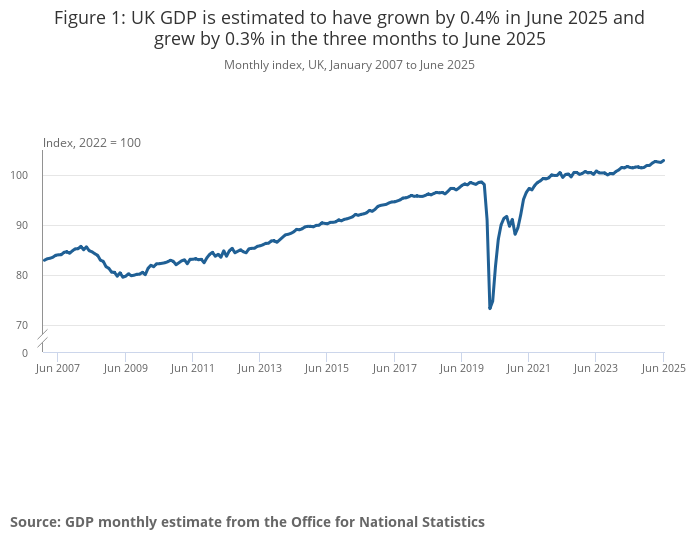
Fiscal and monetary factors could also influence the outlook. Potential tax measures might strain household budgets. Tighter government spending may affect businesses. Policymakers are likely to adjust interest rates carefully, balancing support for growth with inflation control. For insights on monetary policy, visit the Bank of England website.
Global trade conditions add further uncertainty. Supply chain disruptions and fluctuating export demand could constrain growth, while rising energy prices may continue to increase production costs. These external pressures, combined with domestic factors, underline the risks facing the economy in the months ahead.
Analysts expect limited near-term policy changes. Central banks aim to manage inflation while monitoring growth. These conditions create a challenging environment, where gains from earlier quarters are partially offset by cooling activity and emerging economic headwinds.
Overall, the data highlights an economy slowing to more modest growth levels. Businesses and consumers may need to adjust expectations, particularly in sectors sensitive to discretionary spending. Policymakers remain attentive to balancing support for growth with price stability. The coming months will be critical in determining whether the economy regains momentum or continues along a path of cautious expansion.