
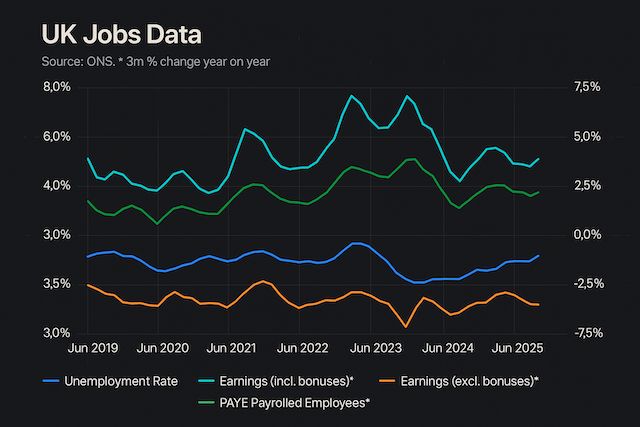
The UK jobs report June 2025 highlights a labour market losing momentum, with unemployment in the three-month period to June at 4.7%, marking a lift in joblessness compared with a year earlier. At the same time, headline measures of pay growth have cooled from recent peaks, signalling that wage pressures are easing but remain above levels consistent with longstanding inflation objectives.
Payrolls falling and vacancies contracting
Payrolled employment has recorded a multi-month decline, with several consecutive falls in the latest HMRC estimates. These drops — visible in the PAYE real-time series — accompany a continued slide in advertised vacancies, pointing to a market where firms are tempering hiring plans and recalibrating headcount in response to higher labour costs and weaker demand.
What the wage numbers tell us
Average weekly earnings, both including and excluding bonuses, have slowed compared with earlier in the cycle. Regular pay growth remains materially above the Bank of England’s 2% inflation objective, meaning that, while momentum has dropped, wages are not yet at a level that would eliminate upside inflation risk without further disinflation in other parts of the economy. That split between cooling momentum and still-elevated year-on-year growth is central to how policymakers and markets read the data.
UK jobs report June 2025: Policy and market outlook
Monetary policy committees are likely to treat this run of labour-market softening with caution. A single month or quarter of weaker activity is rarely definitive; central banks typically look for persistent evidence that wage growth is sustainably declining before committing to a different path for interest rates. In that light, the data are unlikely to instantly reshape the near-term policy stance, but they do reduce the urgency for immediate tightening and keep conditional easing on the table if disinflation continues.
Risks and what to watch next
Downside risks remain: additional tax or payroll cost changes, further weakness in demand-sensitive sectors such as hospitality and retail, or renewed falls in payrolled jobs would deepen the cooling. Important near-term indicators to monitor include monthly HMRC payroll updates, the next ONS labour market bulletin, and vacancy series — together these will indicate whether the recent easing is transient or the start of a more durable slowdown.
UK jobs report June 2025: Practical takeaways for employers and workers
Employers should review near-term hiring and compensation plans against updated cash-flow forecasts; workers and households may face a period of slower nominal wage growth and slightly higher unemployment risk in some sectors. For both groups, flexibility and attention to sectoral signals (vacancies, hours worked, and payroll trends) will be important as the labour market adjusts.